.png)
%20(3).jpeg)
.jpeg)
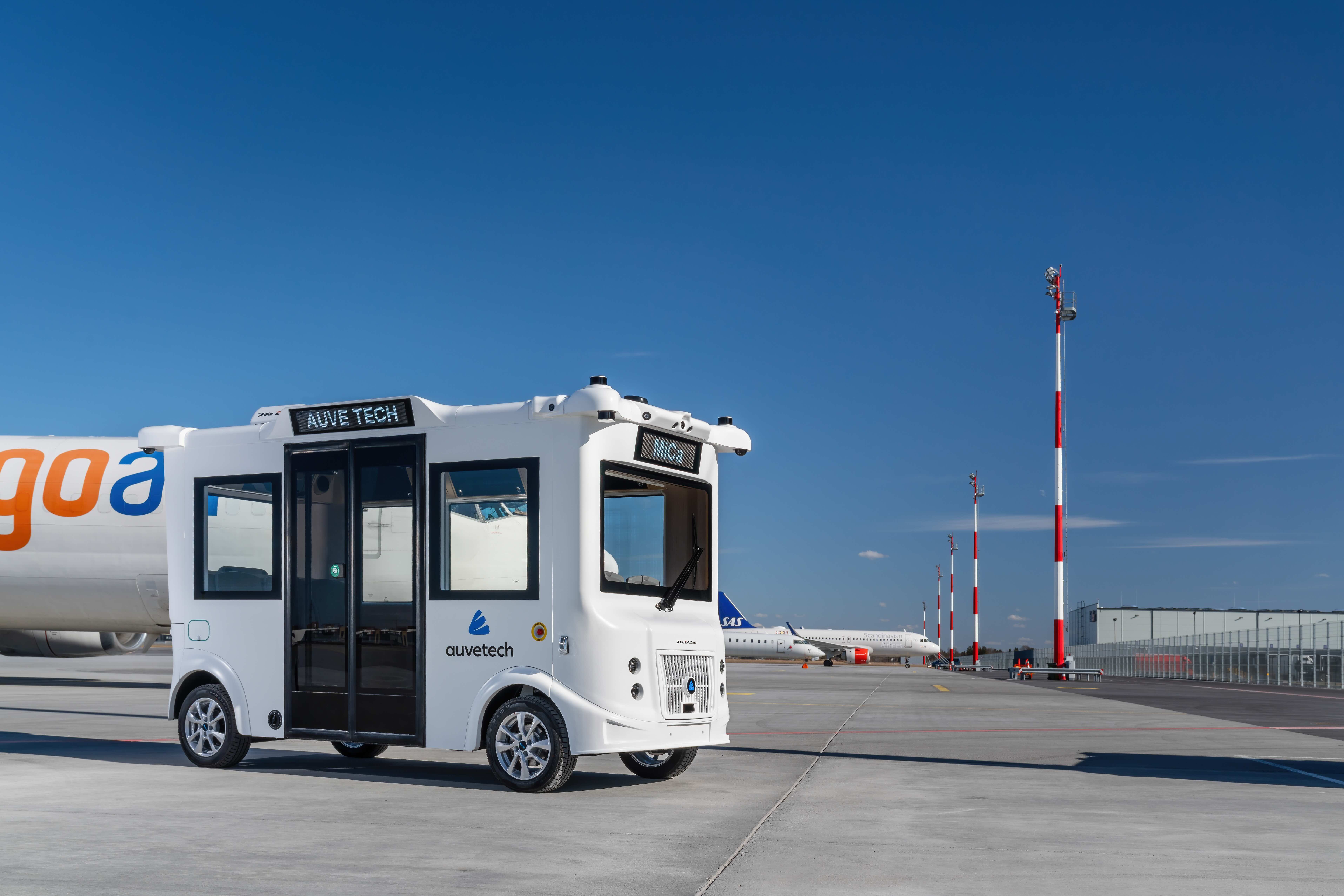
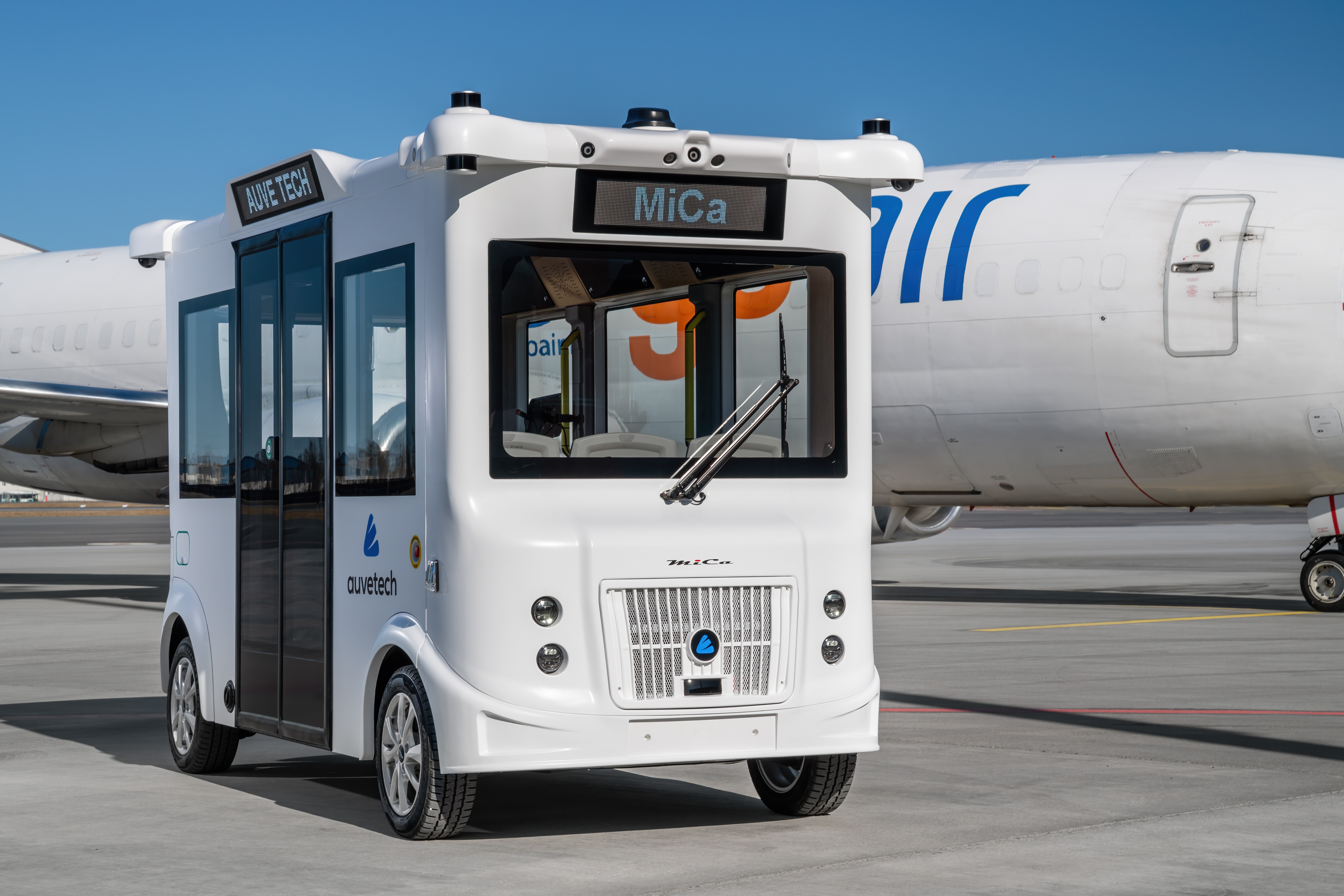
The deployment represents the evolution of Auve Tech's autonomous mobility vision from research and testing into practical operational service.
The project began in early 2022 as a pilot initiative in collaboration with the aircraft maintenance company Magnetic MRO and Tallinn Airport.
In 2022–2023, the first-generation vehicle, "Iseauto," was tested on the premises.
In 2024, the second-generation vehicle, "MiCa," was added to the site. From 2025 onwards, a full-service offering has been provided, which has since evolved into a large-scale, daily commercial operation.
In August 2026 Auve Tech got the approval to remove the onboard safety operator.
On the 7th of October, Auve Tech reached a new milestone, where it became the first European commercial autonomous service that operates without an onboard safety operator for transport of employees in an airport.
Today, 2 MiCas operates a 11-kilometer round-trip route connecting key Magnetic MRO facilities and supporting daily airport operations. Covering 1000 km a week.
Airports are among the most complex environments for autonomous vehicle deployment. Every movement must meet strict safety requirements while operating alongside critical infrastructure, maintenance operations, service vehicles, and aircraft activity.
The operating environment includes:
Unlike traditional public road deployments, the airport environment demands precision, predictability, and reliability at every stage of operation.
The project was designed to:
Auve Tech deployed MiCa as an autonomous mobility solution supported by advanced remote supervision capabilities.
The deployment includes:
Rather than simply replacing a vehicle, the solution modernizes internal transportation workflows and enables more efficient resource allocation throughout airport operations.
.JPG)
Auve Tech began operations at Tallinn Airport in January 2023 using its first-generation autonomous vehicle, Iseauto. The objective was to understand operational requirements and validate autonomy within airport conditions.
Over nearly three years, continuous testing provided valuable insights into airport infrastructure, operational procedures, safety requirements, and vehicle performance.
Lessons learned from airport operations directly informed the development of MiCa and Auve Stack 2.0, improving perception, navigation, robustness, and operational reliability.
A dedicated route was established to connect Magnetic MRO facilities and support daily transportation needs within the airport environment.
On January 12, 2026, MiCa officially entered operational service, transitioning from testing into a practical transportation solution supporting airport logistics.
The current deployment forms the foundation for future removal of onboard safety operators, demonstrating a pathway toward fully telemonitored autonomous mobility.
Airport operations demand exceptional reliability and compliance due to proximity to aircraft, personnel, and mission-critical infrastructure.
Internal transportation and logistics roles are increasingly affected by labor shortages, creating pressure on operational efficiency.
Many autonomous vehicle programs never move beyond testing. The challenge was to create a service capable of delivering value every day.
Moving from onboard operators to telemonitoring requires robust autonomous systems, advanced connectivity, and carefully designed operational procedures.
The project moved beyond experimentation and became a fully operational transportation service supporting real business needs.
Personnel and equipment can be transported more efficiently between facilities, reducing manual coordination and improving workflow visibility.
Autonomous transportation helps alleviate staffing pressures while allowing employees to focus on higher-value tasks.
The deployment demonstrates that autonomous transportation can safely operate with remote supervision, paving the way for future operator-free services.
Tallinn Airport now serves as an internationally significant example of autonomous transportation in aviation, providing a model for airports seeking smarter mobility solutions.
One of the most important innovations of this deployment is not the vehicle itself, but the shift from onboard supervision to remote monitoring.
Traditional autonomous vehicle deployments often require a safety operator seated inside the vehicle. While effective for testing, this model limits scalability because every vehicle still requires dedicated personnel.
MiCa's teleoperation-ready architecture changes that equation.
With remote monitoring:
This approach represents the next step in autonomous mobility, moving from assisted autonomy toward truly scalable driverless transportation systems.
.jpeg)
.jpeg)
Whether you're interested in deploying autonomous shuttles, exploring partnership opportunities, or learning more about our technology, our team is here to help.
.svg)